Brand architecture for multi-brand companies: how to brand a parent company and its sub-brands
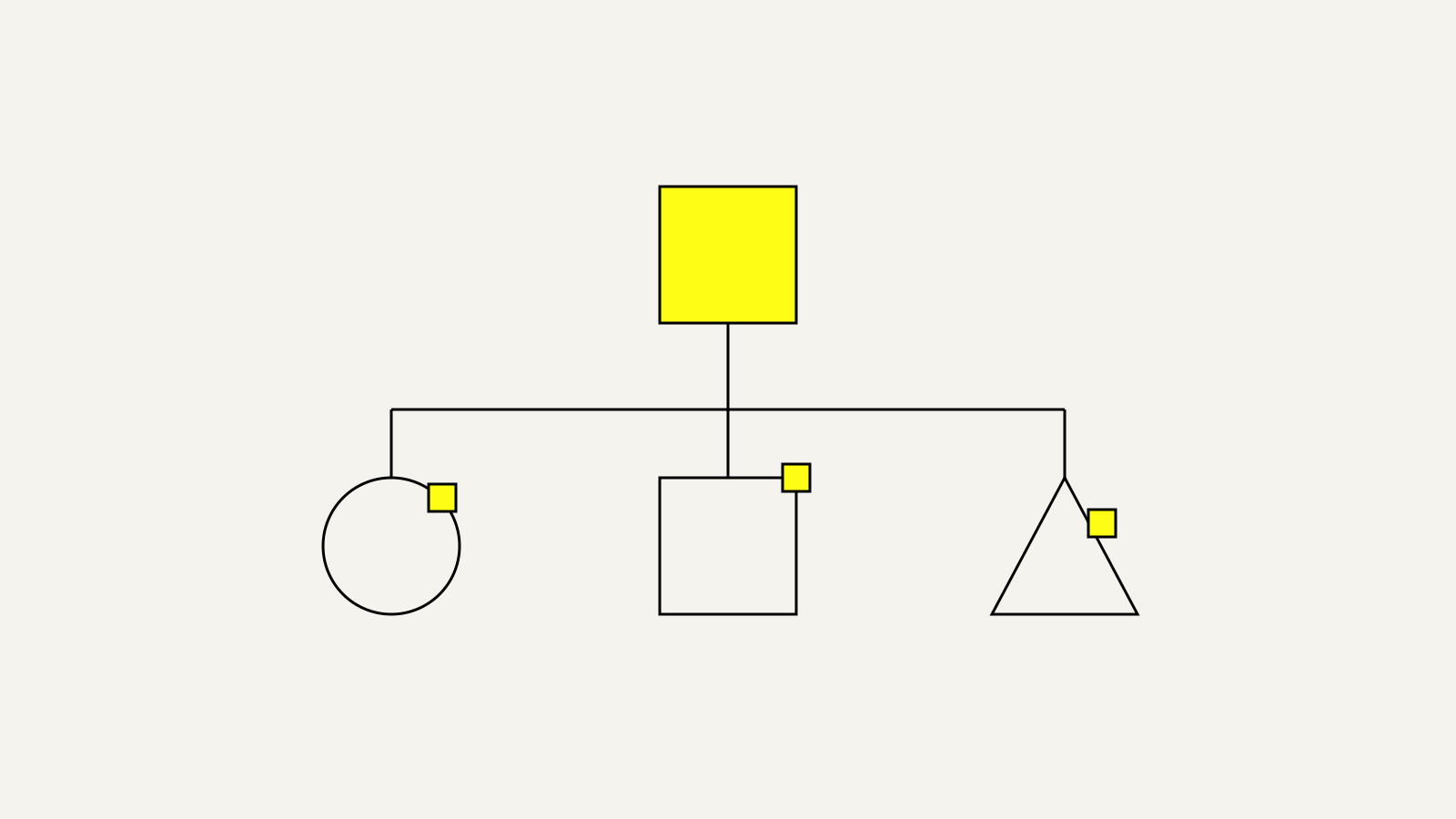

Rebranding one company is hard. Rebranding a group is a different exercise. The moment a parent company owns several brands, the conversation stops being about a logo and starts being about relationships: who leads, who follows, who stands alone, and what ties them together.
TL;DR There is no right model in general, only a right model for how your brands sell. Start from your markets and your customers, decide how visible the parent should be, then design the shared and the owned parts of each identity.
We see this question in almost every multi-brand rebrand we work on. A group realizes its sub-brands all look the same and none of them stands out in its own market. Or the opposite: a portfolio of acquired brands that share nothing, and a parent nobody recognizes. Both situations come down to the same work: brand architecture.
What is brand architecture?
Brand architecture is the set of rules that defines how a parent brand, its sub-brands and its products relate to each other, in name and in look.
In most groups, three levels are enough:
- The parent brand carries the company's values, its ambition and its credibility with investors, talent and partners.
- Sub-brands carry a market, a product family or a flagship solution. They are the brands customers actually buy.
- Products, ranges and modules sit underneath. Most of them don't need a brand at all: a clear descriptive name and a few typographic rules do the job.
It matters in a rebrand because every design decision depends on it. You can't draw a logo for a sub-brand before deciding whether it should look like its parent, borrow one element from it, or ignore it entirely. Skip that decision and the visual work turns into endless debates about taste.
What are the main brand architecture models?
Think of a spectrum: from one brand that carries everything to a portfolio of brands that share nothing visible. Most groups land somewhere in between.
- One master brand. Shared: everything, from name and logo to colours and type. Each brand owns: a product name. Examples: Google (Google Maps, Google Drive), Virgin. Works best when products serve the same customers and benefit from the same reputation.
- One identity, one accent per entity. Shared: logo construction, typography, layout. Each brand owns: a colour, sometimes a descriptor. Example: FedEx (Express, Ground, Freight). Works best when divisions are distinct but customers should feel one company.
- Endorsed brands. Shared: a group mention, a signature, sometimes a shared element. Each brand owns: logo, palette, tone of voice. Examples: Salesforce (Slack, Tableau), Instagram and WhatsApp "from Meta", Courtyard by Marriott. Works best when sub-brands need their own personality but gain from the parent's credibility.
- House of brands. Shared: nothing visible, at most a footer mention. Each brand owns: everything. Examples: Procter & Gamble (Pampers, Gillette), Unilever (Dove, Ben & Jerry's), Bending Spoons (Evernote, WeTransfer, Vimeo). Works best when brands target unrelated markets, or the group buys and runs brands with their own equity.
The two ends of the spectrum tell opposite stories. With a master brand, the parent is the hero and the products are features. Google doesn't need you to remember "Drive" as a brand; it needs you to trust Google. In a house of brands, the parent almost disappears. Few shoppers know who makes their razor or their ice cream, and that is by design: each brand can take risks, target a niche or be sold without damaging the others.
The middle of the spectrum is where most rebrands get interesting, and where most of the debate happens.
How do real companies combine these models?
Few groups pick one model and stop there. The most interesting architectures come from how a company grows: by extending its name, by building and buying, or by collecting brands.
Extending one name: Uber, Uber Eats, Uber Freight
Some companies build a name strong enough to carry new businesses with a single added word. Uber started with rides, then launched Uber Eats for food delivery and Uber Freight for logistics. Each service has its own app, audience and economics, yet the parent name does the heavy lifting: customers already trust it, already have the account, already know the experience.
This is a master brand stretched across markets. It works when the parent name stands for a promise that travels, here convenience on demand. The risk is the reverse: a failure in one service hits the whole name, and a business that drifts too far from the core promise starts to weaken it.
All three at once: Figma
Figma is a good example of a company that doesn't pick one model. Its product menu shows three logics side by side.
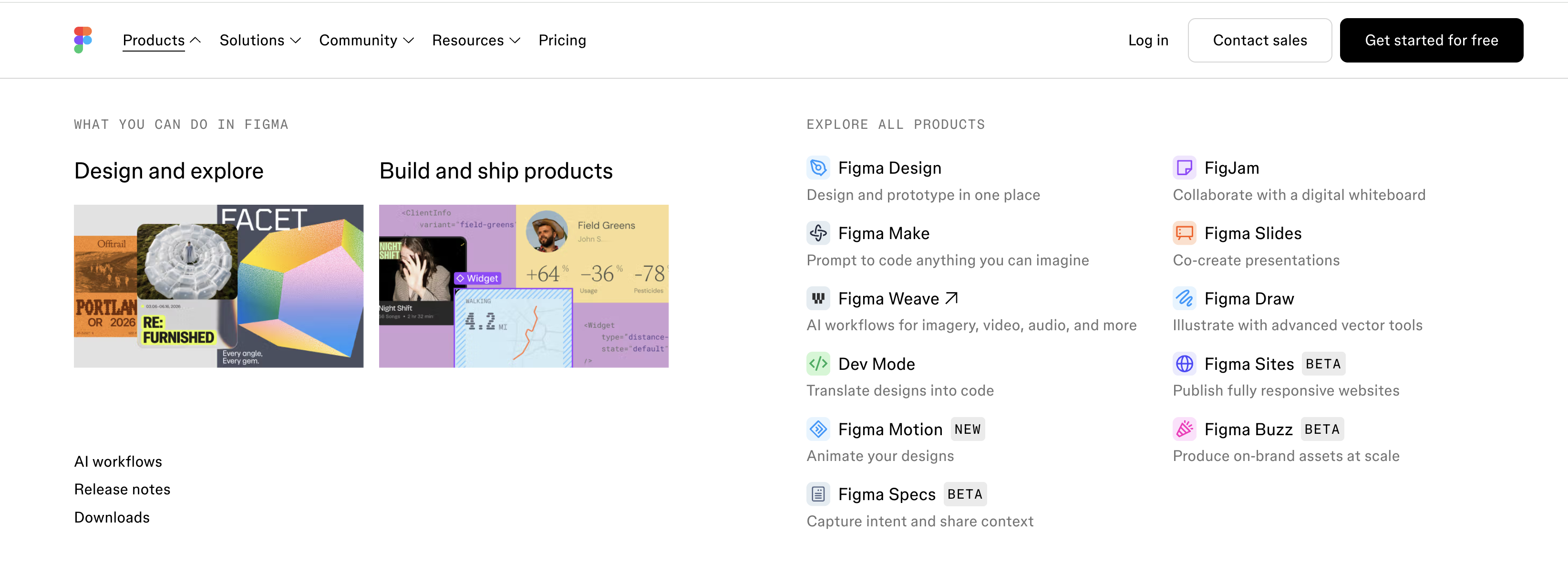
- Extending the name. Figma Design, Figma Slides, Figma Draw, Figma Sites, Figma Make, Figma Motion: the master brand plus a descriptive word. Customers know exactly what each product does and who makes it.
- Creating a dedicated brand. FigJam, the collaborative whiteboard, got its own name. It speaks to a wider audience than designers, workshops and brainstorms, and needed a lighter, more playful personality. The name still nods to the parent.
- Absorbing an acquisition. Figma bought Weavy, an AI platform for generating images and video, and brought it into the family as Figma Weave. The acquired product took the parent's name and joined its product system.
All of it holds together because the visual system is strict: the same icon style, the same typography, the same naming grammar. The architecture can flex because the identity doesn't.
A company brand and a product brand: Anthropic and Claude
Anthropic shows another split: the company and the product carry two different names, with two different jobs.
- Anthropic is the company brand. Its site leads with research, policy and commitments, and presents the company as a public benefit corporation focused on AI safety. It speaks to researchers, policymakers, talent and partners.
- Claude is the product master brand. Everything customers use is built on that one name plus a descriptor: Claude Code, Claude Cowork, Claude Security, Claude Science, Claude Platform, and extensions like Claude in Chrome or Claude for Microsoft 365. It's the Uber logic applied to an AI product family.
- Models get a naming system of their own. Haiku, Sonnet and Opus follow a literary logic, from the shortest form to the longest, and newer tiers like Mythos and Fable extend the same family of words. Customers can read the hierarchy from the names alone.
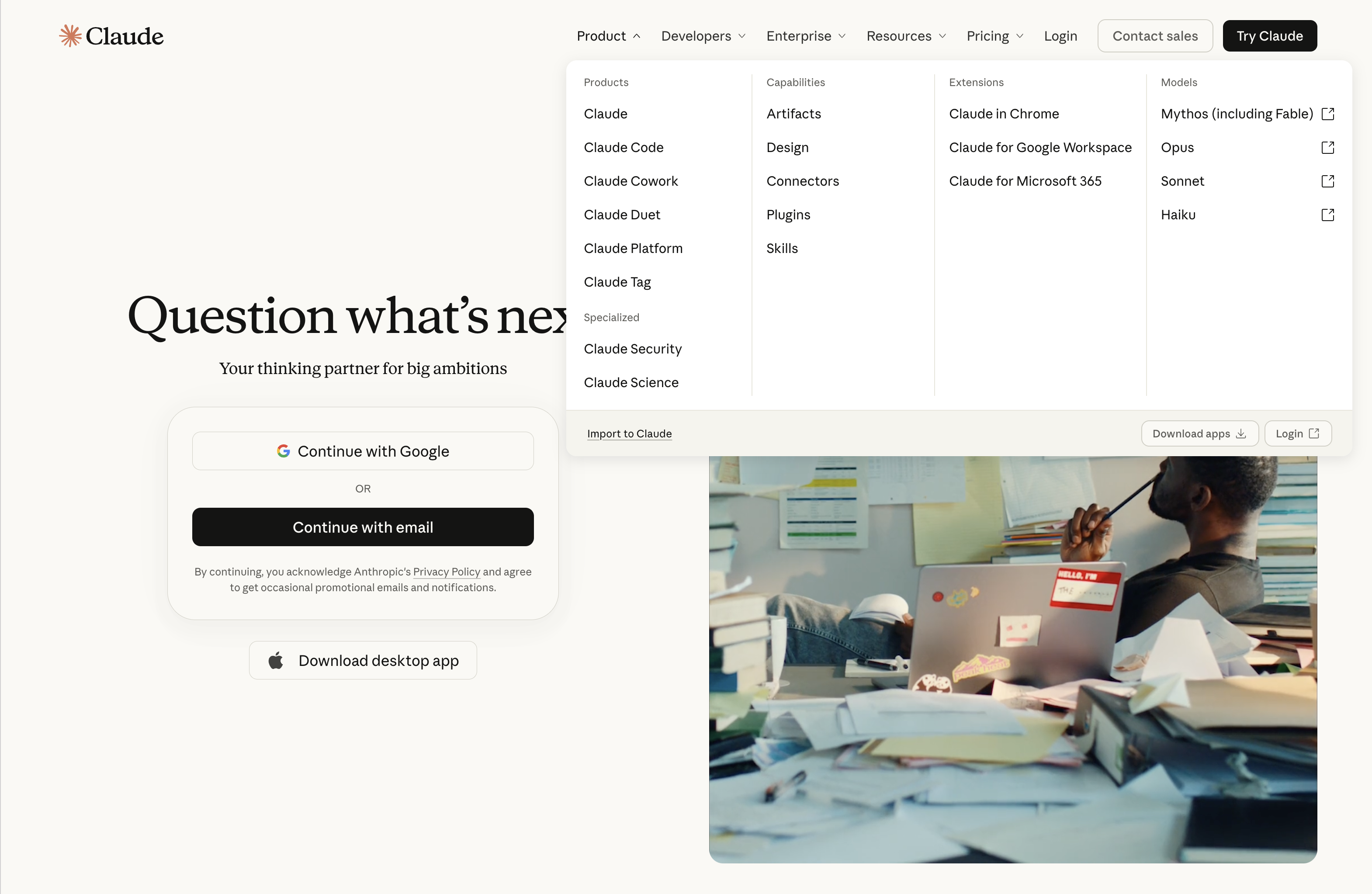
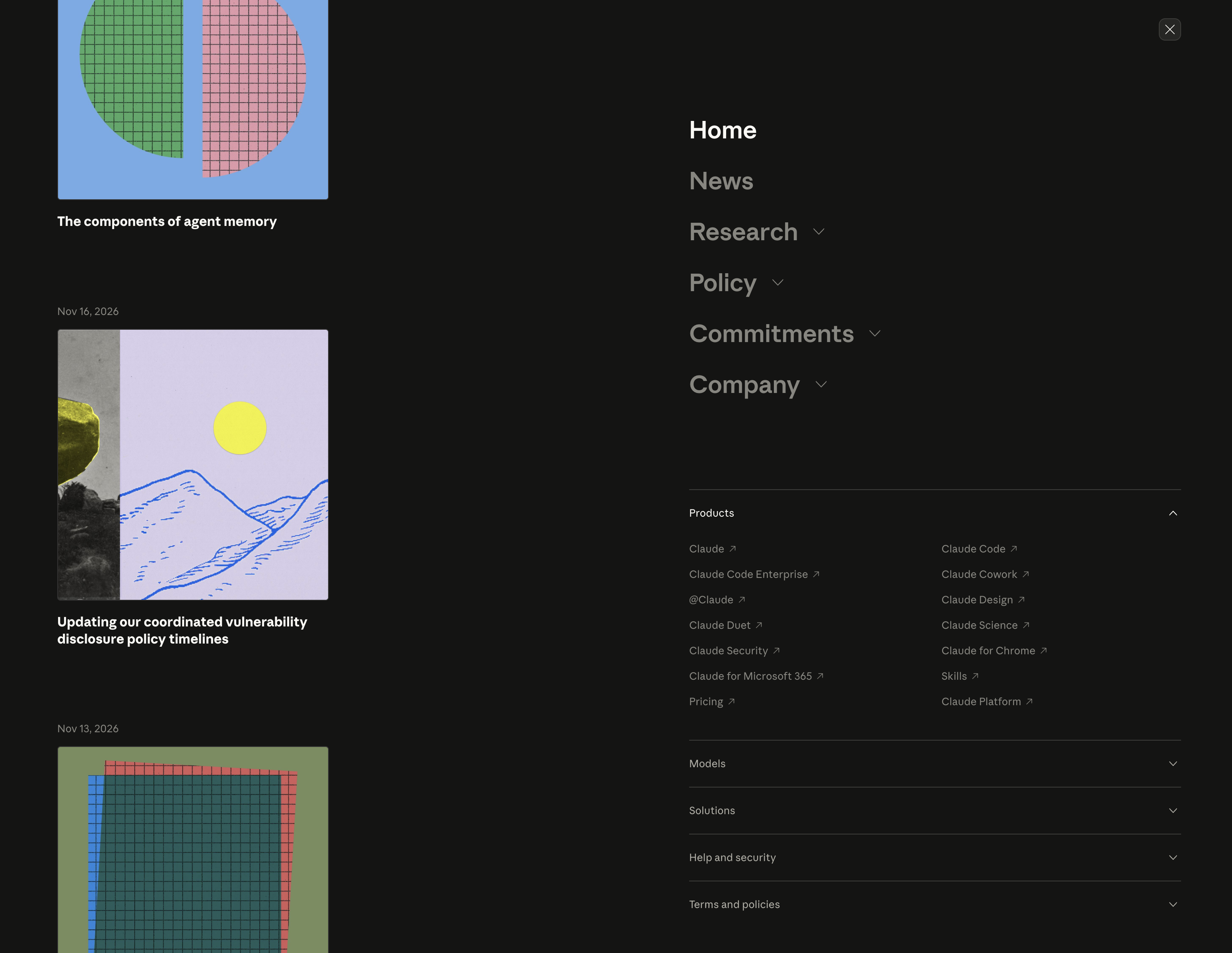
The result is a clear division of roles. The company brand builds trust on the long term, the product brand carries the experience, and the model names make a technical range easy to understand.
A master brand with a holding behind it: Google and Alphabet
Google's product page reads like a lesson in brand architecture. Most products follow the master brand logic: Google Docs, Google Maps, Google Photos, Google Calendar. But some of the biggest names stand on their own: Android, Chrome, Gmail, Pixel, and Gemini, its AI brand. Several came from acquisitions and kept their names, like YouTube, Waze and Fitbit. Others carry a light endorsement, like Wear OS by Google.
What holds it together is the visual system: the same four colours and the same icon style across almost every product, whatever its name.
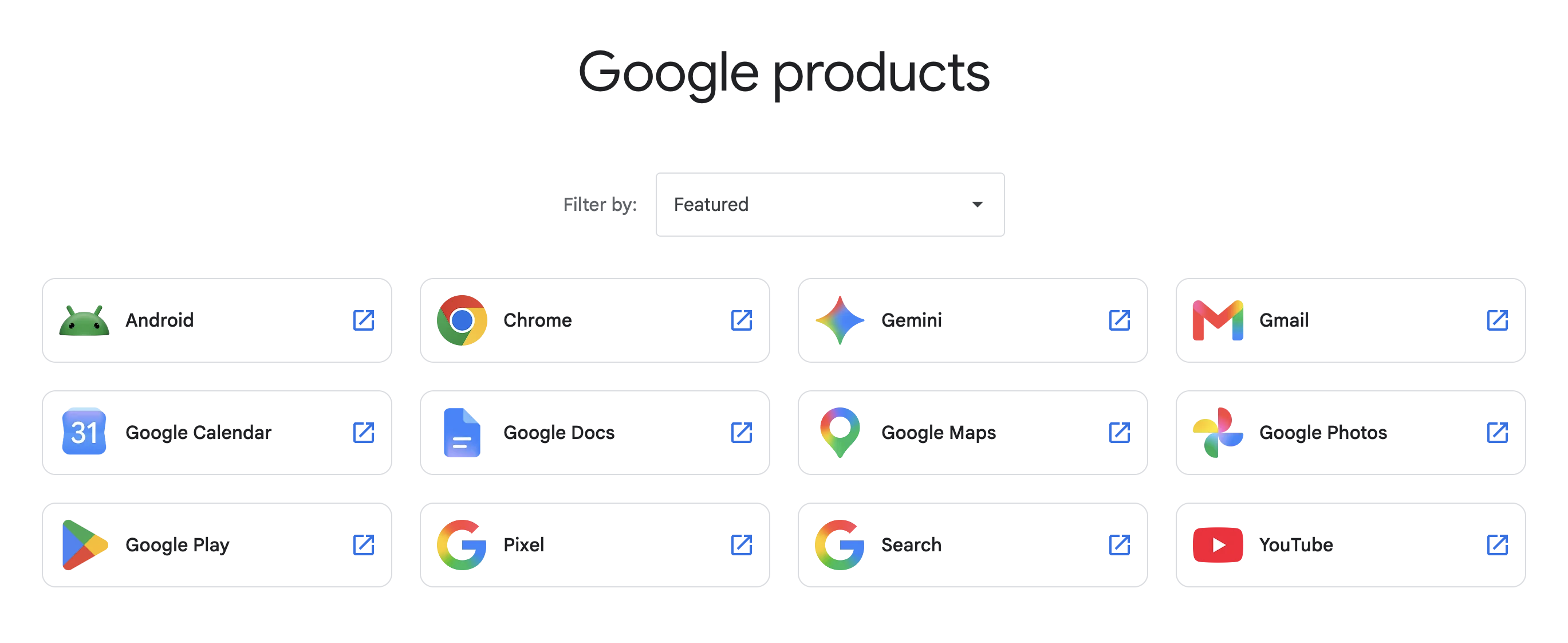
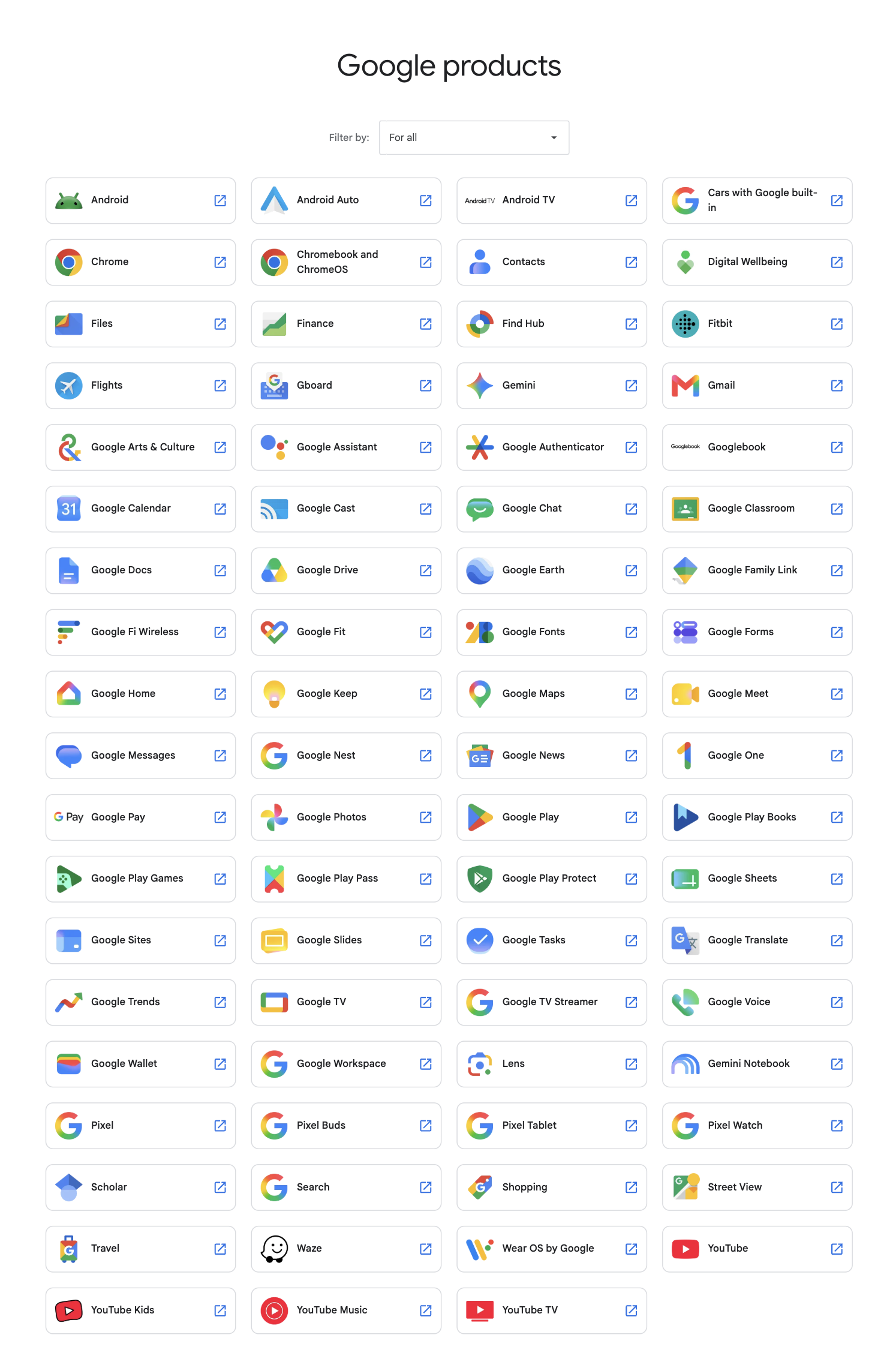
Above all of this sits Alphabet, the holding created in 2015 to separate Google from other ventures such as Waymo. Alphabet is the opposite of Google: almost invisible to consumers, it speaks to investors and gives each company room to grow under its own name. One group, two very different brand roles.
Renaming the parent: Meta
In 2021, Facebook renamed its parent company Meta. The move separated the company from its first product and gave the group a name that could hold everything it was building next.
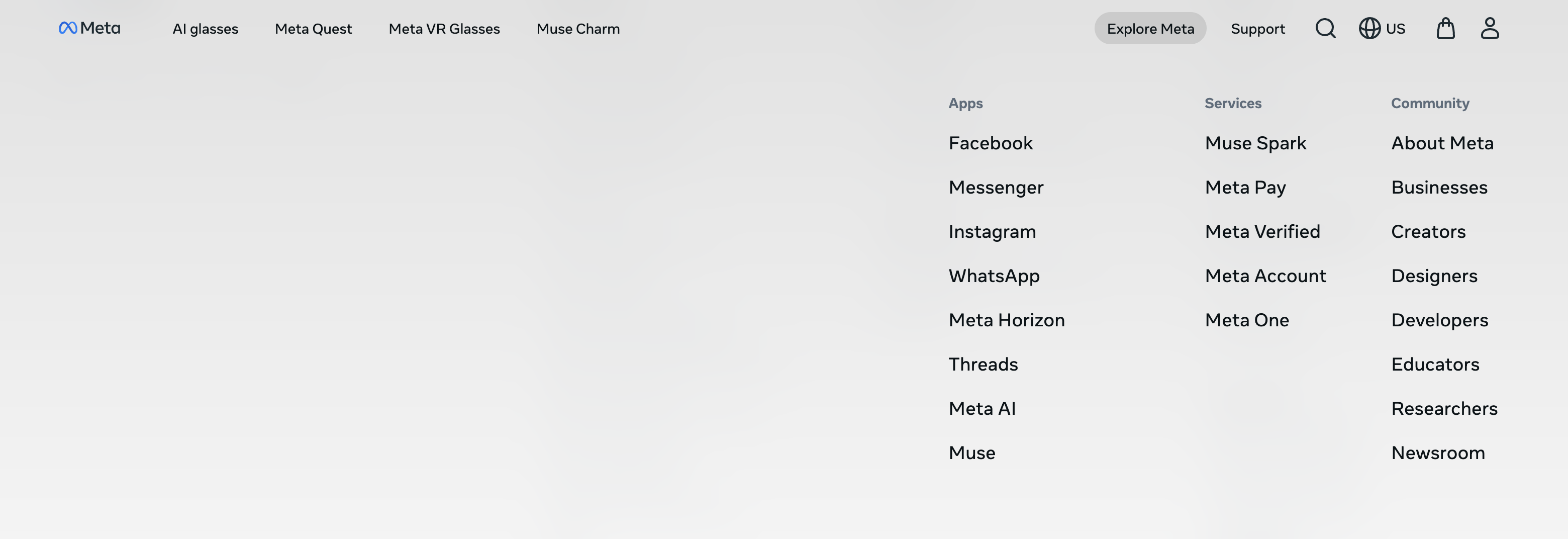
Its navigation now shows several layers at once:
- Acquired apps that kept their names. Instagram and WhatsApp remain brands of their own, with a discreet "from Meta" endorsement.
- The original product, now one brand among others. Facebook and Messenger sit in the same list as Threads.
- New products and services under the Meta name. Meta Quest, Meta Horizon, Meta Pay, Meta Verified, Meta AI.
- A new product family with its own name. Muse, Muse Spark and Muse Charm form a separate line, showing that even a group with a strong master brand still creates new names when it wants a fresh start.
Meta is a reminder that architecture isn't fixed. A group can rename its parent, promote a product to a brand or launch a new family years after its founding. The rules just need to stay readable as it grows.
An institutional endorsed system: Dassault Systèmes
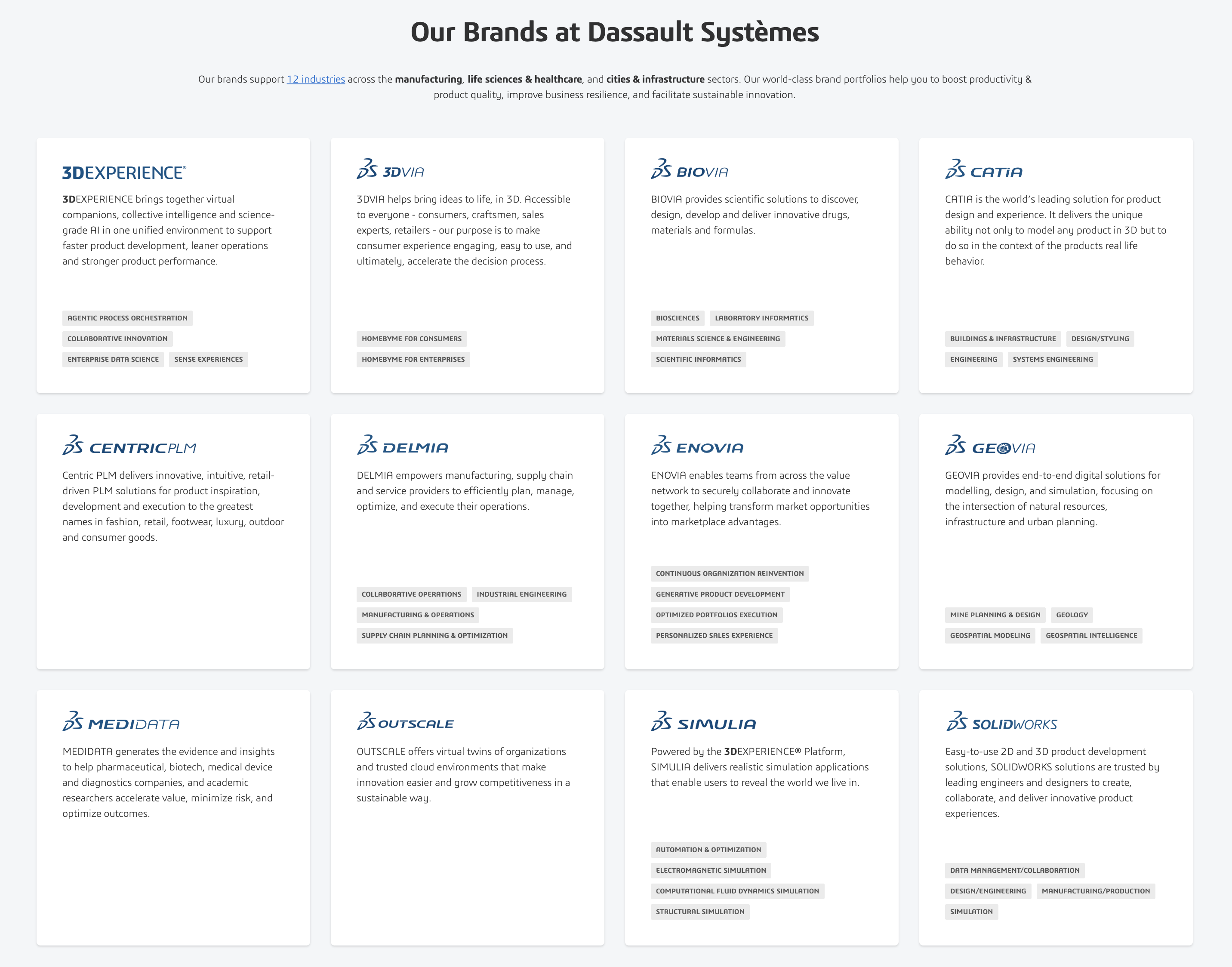
For a more industrial and institutional example, Dassault Systèmes is one of the clearest endorsed architectures in B2B software. The group presents a portfolio of a dozen brands serving 12 industries across manufacturing, life sciences and healthcare, and cities and infrastructure.
The system works on four levels at once:
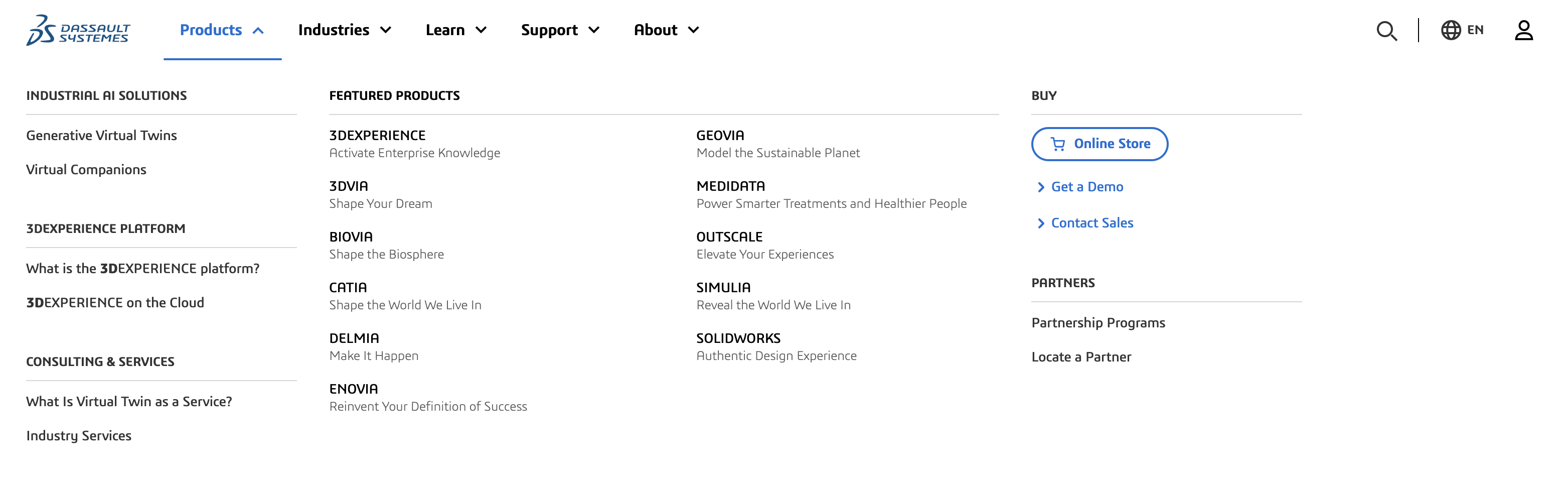
- One shared signature. Almost every brand logo starts with the same 3DS emblem, followed by the brand name in the same typographic style. CATIA, SIMULIA or SOLIDWORKS each have their own name, but no one can mistake who stands behind them.
- A naming grammar. Many brands share the same ending: CATIA, SIMULIA, DELMIA, ENOVIA, BIOVIA, GEOVIA, 3DVIA. Each name signals a domain (design, simulation, manufacturing, life sciences, natural resources) while sounding like part of one family.
- Acquisitions brought into the family. Brands that came from outside, like SOLIDWORKS, MEDIDATA or Centric PLM, kept their names, which carry real equity in their markets, but adopted the 3DS emblem and the group's typographic codes.
- A platform above the brands. 3DEXPERIENCE is presented as the environment that connects them, and several brands describe themselves as powered by it. It gives the group a story bigger than a list of software products.
Each brand also has its own short promise, from "Shape the World We Live In" for CATIA to "Make It Happen" for DELMIA. The result is a portfolio where every brand can lead its own market, while the group's credibility travels with each logo. It's a strong model for any group that sells to experts in very different industries.
Functional names, with a few chosen exceptions: Shopify
Shopify takes the opposite route to Dassault Systèmes. Its product menu is organized by what merchants want to do, not by brand: build your website, sell anywhere, run your business, marketing and analytics, get paid. Almost every product inside carries a plain, descriptive name: Website Builder, Themes, Checkout, Payments, Point of Sale, Shipping, Analytics.
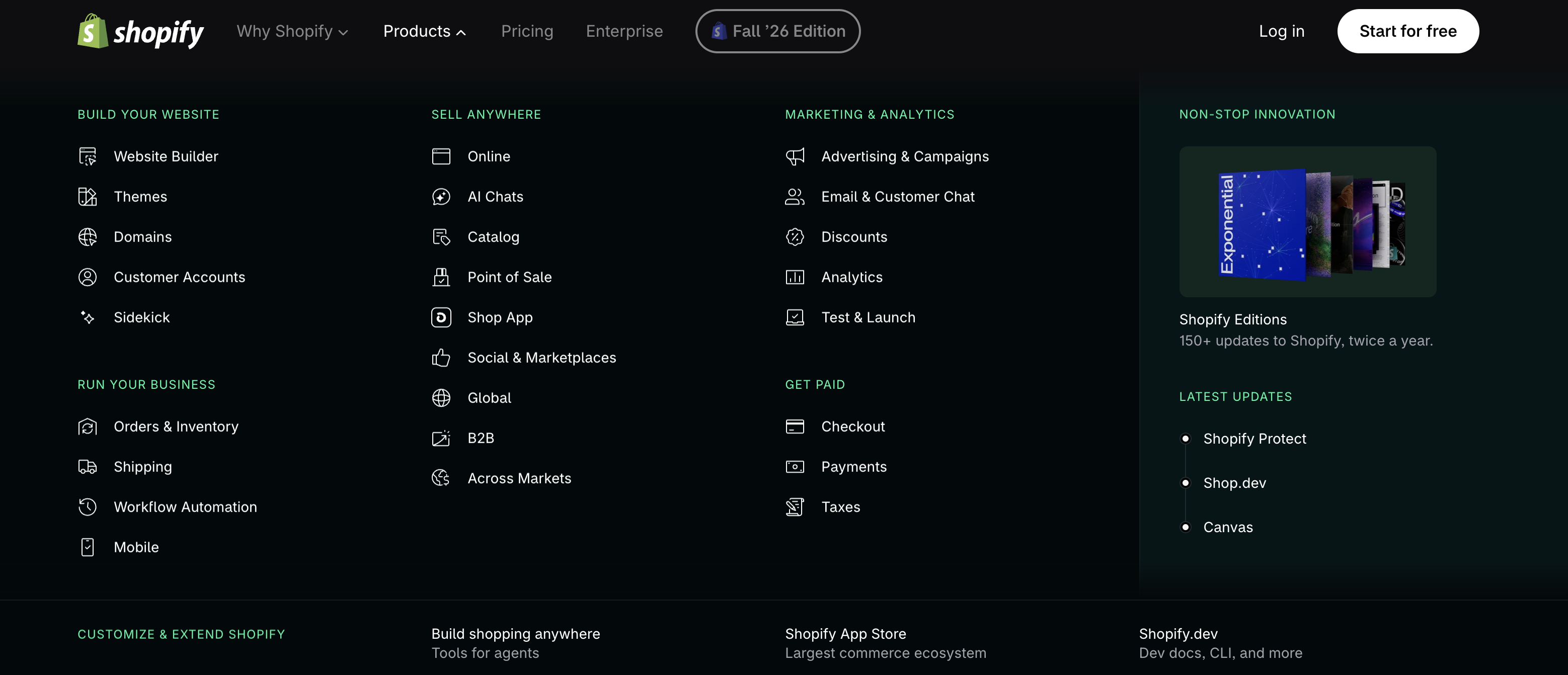
In this model, the master brand does all the work and products are features. A merchant doesn't need to learn a new name to understand what Checkout does. Names are reserved for a handful of cases where a personality or an audience of its own adds value:
- Sidekick, the AI assistant. It has its own name and its own character, a small masked figure that introduces itself as "Your AI Shopify expert" on the homepage.
- Shop, the consumer app. It speaks to shoppers rather than merchants, so it gets a name of its own.
- Shopify Editions, the release moments. Twice a year, Shopify packages its product updates into a named edition, turning a changelog into a launch event.
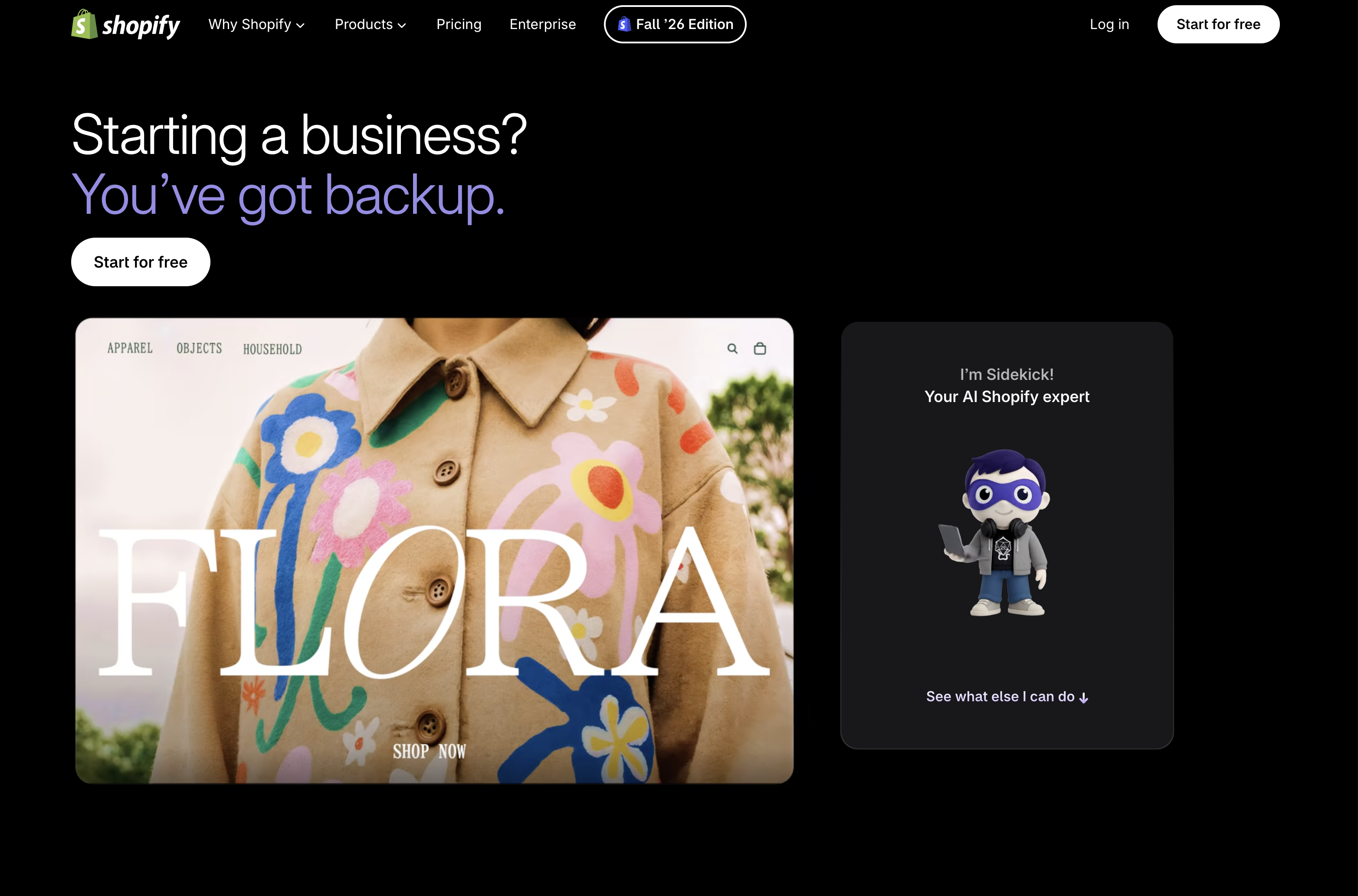
The lesson: you don't need many brands to have a strong architecture. Clear functional names, grouped by customer need, plus a few deliberate exceptions, can be the most readable system of all.
Building and buying: Atlassian, Jira, Trello
Atlassian grew with products built in-house, like Jira and Confluence, and with major acquisitions, like Trello in 2017 and Loom in 2023. It didn't rename what it bought. Trello kept its name and its fan base, but over time moved into Atlassian's shared design language: the same icon system, the same logo construction, the same product family feel.
The lesson for groups that acquire: you don't have to choose between erasing an acquired brand and leaving it untouched. You can keep the name customers love and bring the identity into the family step by step. Done well, the acquired brand gains the parent's credibility and the parent gains a product people already ask for by name.
Atlassian's navigation adds one more layer worth noticing: collections. Teamwork Collection bundles Jira, Confluence and Loom; Service Collection bundles Jira Service Management and Customer Service Management. Products are grouped by the team they serve, not by where they came from. Built or bought, they all sit in the same menu, with the same icon family.

Collecting strong brands: Bending Spoons
Bending Spoons sits at the far end of the spectrum. The Italian group's own tagline sums up the model: it acquires and improves iconic products. Its portfolio includes Evernote, WeTransfer, Vimeo, AOL, Tractive, Eventbrite, Komoot and Meetup, each run as an independent brand. Most users have never heard of the holding: the brands keep their names, logos and personalities, with at most a discreet mention in the legal pages.
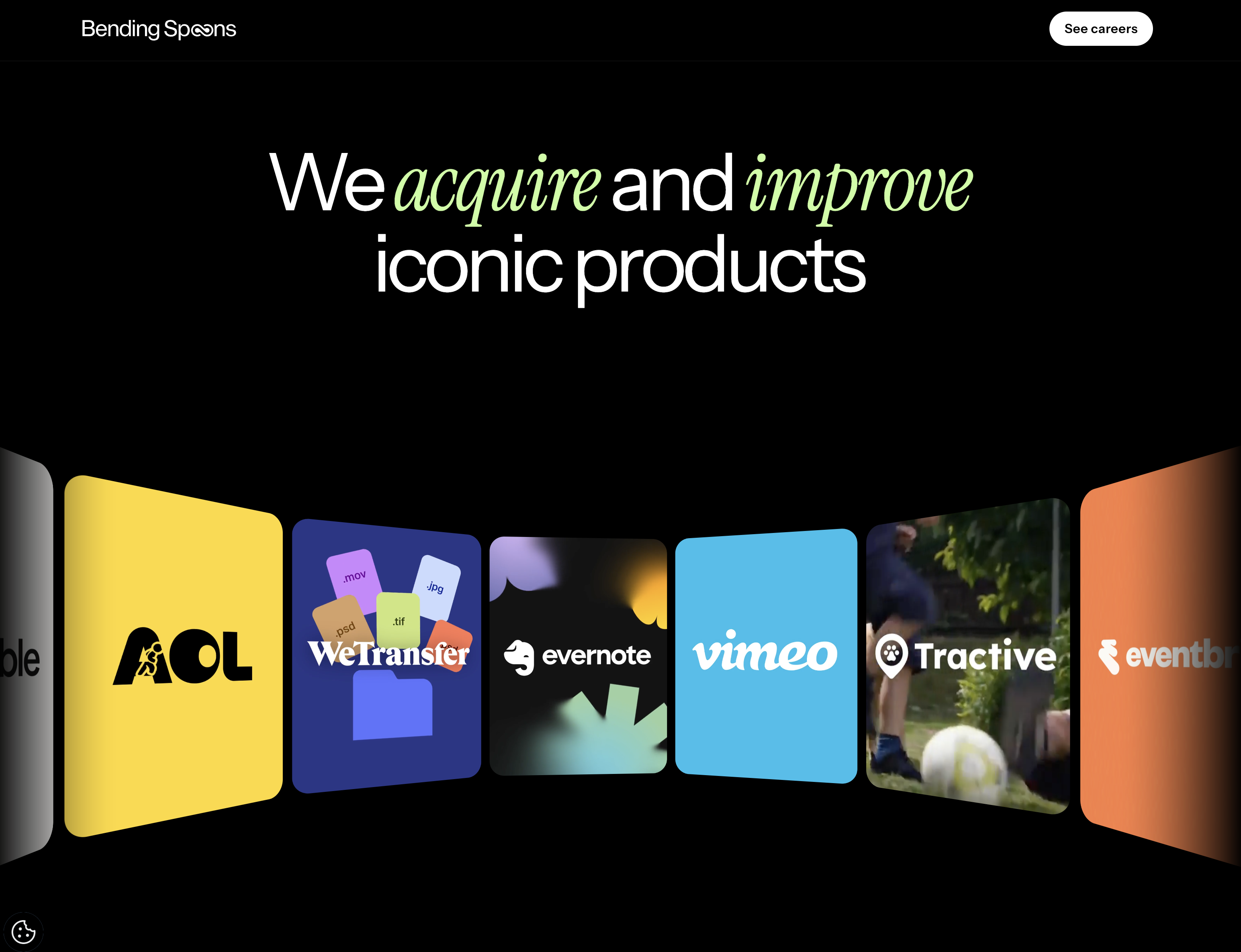
This is a house of brands built through acquisition. It makes sense when each brand has its own equity, its own community and its own market, and when the parent's value lies in operations, not in public recognition. The challenge is internal rather than visual: the holding needs a strong employer brand and a clear story for investors and talent, even if customers never see it.
From one agency to a group: KLIMB
We went through this ourselves. KLIMB started as a single brand and website studio and grew under one name for several years. As clients asked for more, we launched new agencies rather than stretching KLIMB into everything: Firstrow for SEO and GEO, and Encore Nous for video production. Each has its own name, its own lead and its own identity, because each speaks to a different buyer with a different expertise.
The next step was to give the whole a meaning. We created a group, Perception Services, to tie the agencies together: a parent that speaks to talent, partners and investors, while each agency keeps its own voice with clients. It's the same journey many companies follow, from a strong master brand to a small house of brands with a light, visible endorsement.
How is AI changing brand architecture?
AI has become a new brand architecture question: is it a feature of your existing products, or a brand of its own?
The answer often depends on where a company comes from. AI-native companies build their architecture around AI from day one. Established software companies add it later, and many of them choose to give it a dedicated name, so customers can see it as something new rather than an update buried in a menu.
- The brand name plus "AI". The simplest route keeps the master brand and adds two letters. Payfit, the payroll and HR platform whose brand identity we redesigned, brings all its AI features together under Payfit AI, presented as the first AI agent dedicated to payroll and HR. Payfit AI gets its own symbol, a soft gradient asterisk, and a featured card in the product menu, yet it still reads as Payfit. Meta follows the same logic with Meta AI. It signals novelty without creating a new name to learn, and gives every AI feature a single banner to launch under.
- A dedicated AI brand on top of a product family. Atlassian launched Rovo, presented as AI that knows your business, and placed it across its whole portfolio, from Jira to Confluence. Rovo isn't a product among others; it powers the collections.
- A named AI assistant inside a master brand. Shopify, which keeps most of its products functionally named, gave its AI a name and a face: Sidekick, a character presented as your AI Shopify expert.
- A named AI teammate with its own identity. xAI, which merged with X in 2025, launched Grok Bot with its own name, its own character and its own visual universe, built around AI teammates you can hand real work to.
- AI-native products that keep multiplying. OpenAI's menu now lists ChatGPT, Codex and Dots. Dots, its always-on agents, launched with its own name and a cast of tactile characters, a very different register from ChatGPT's minimal interface.
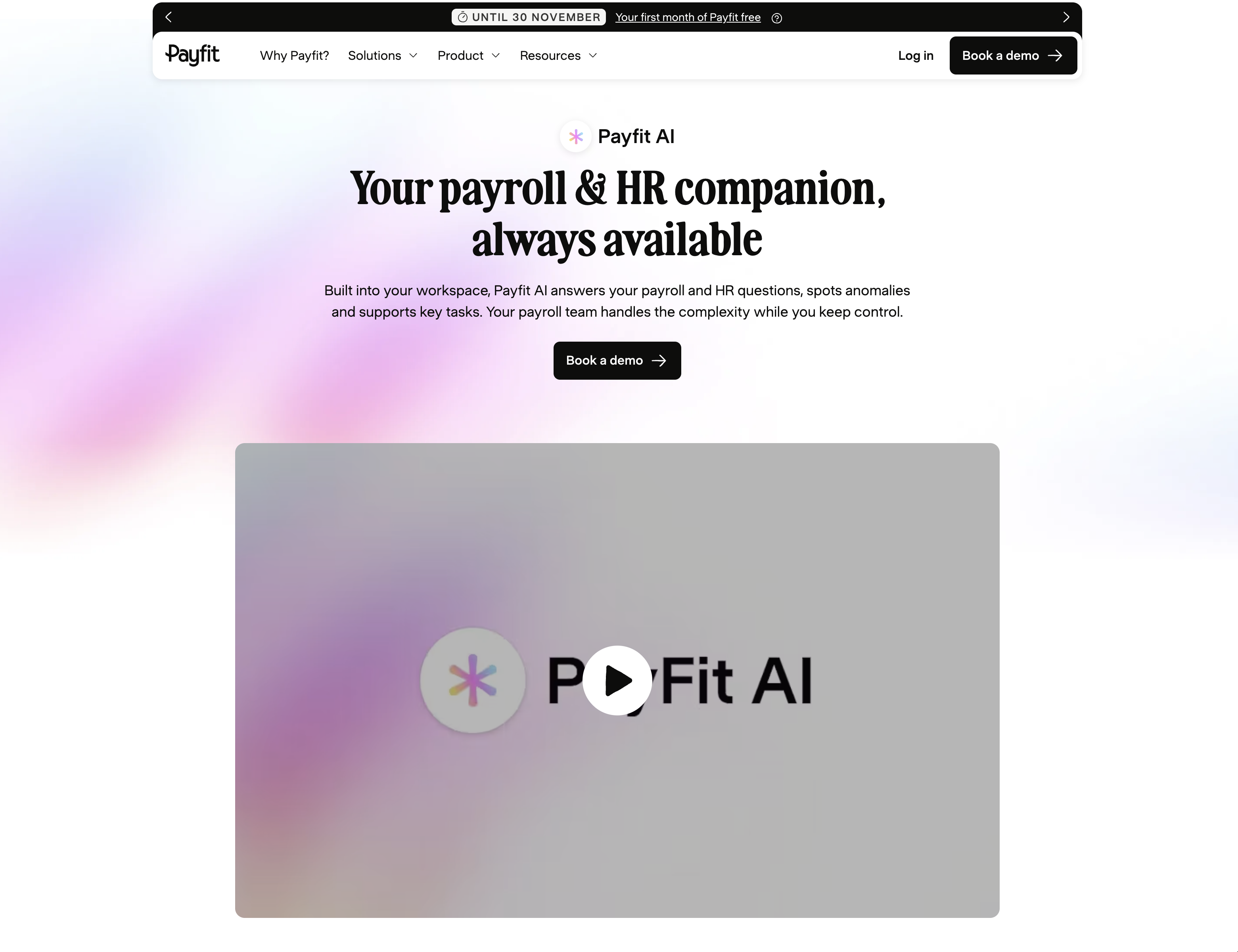
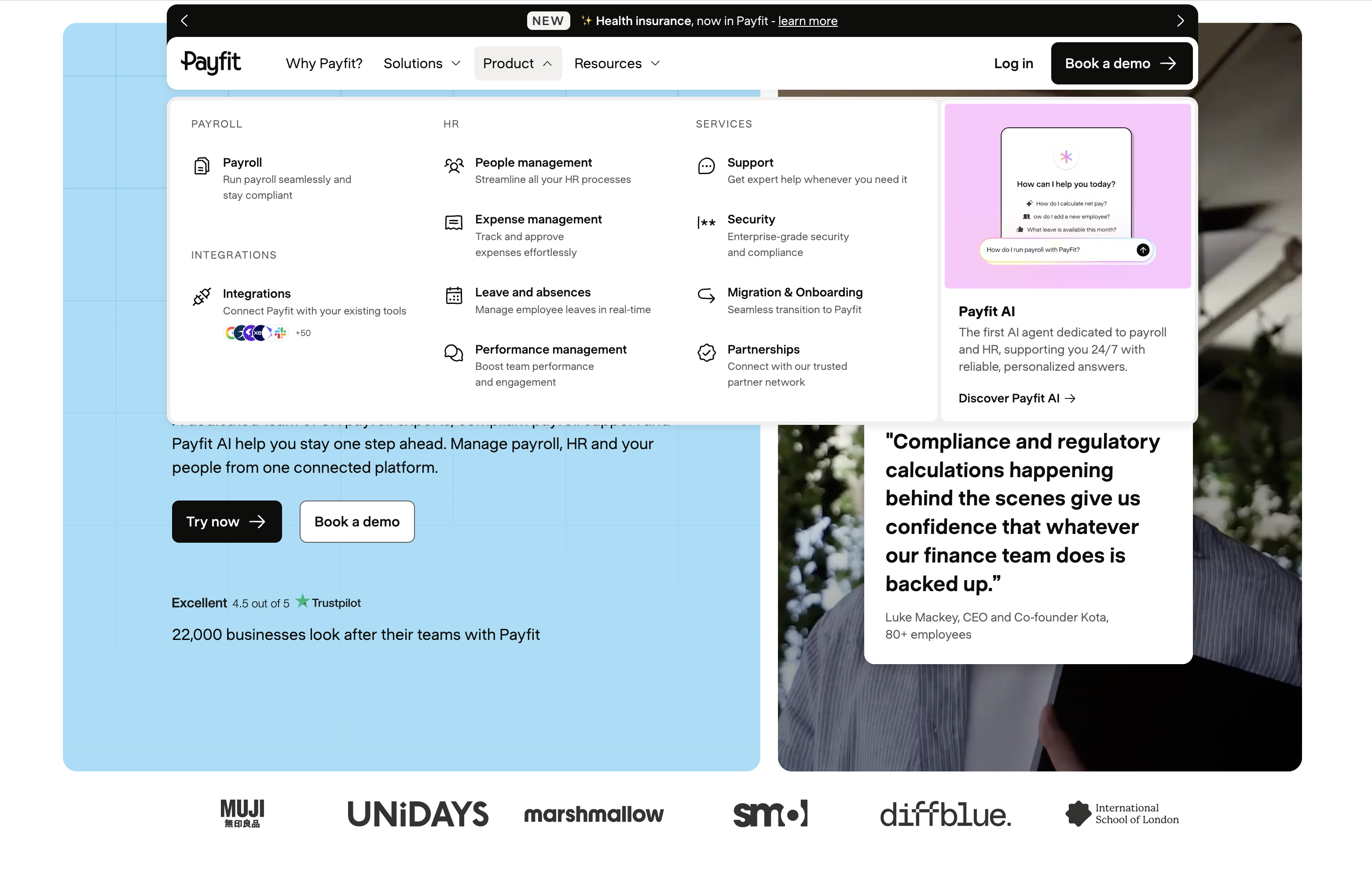
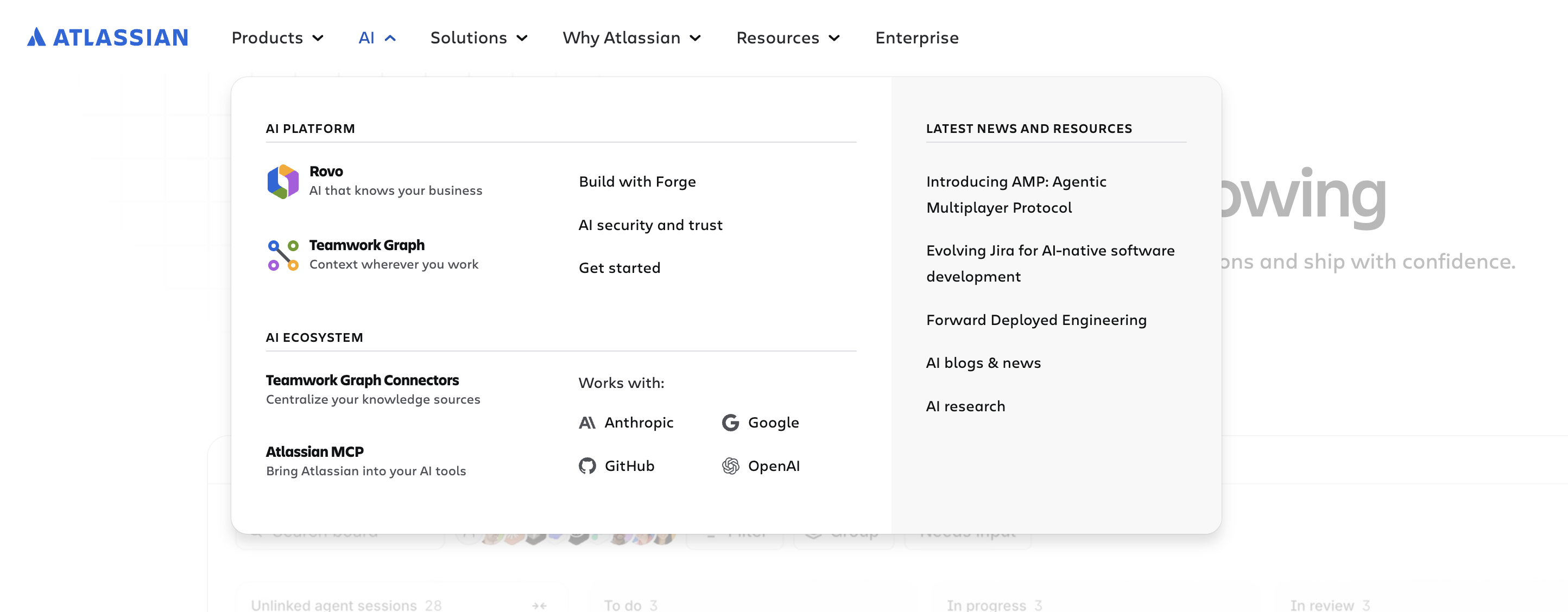
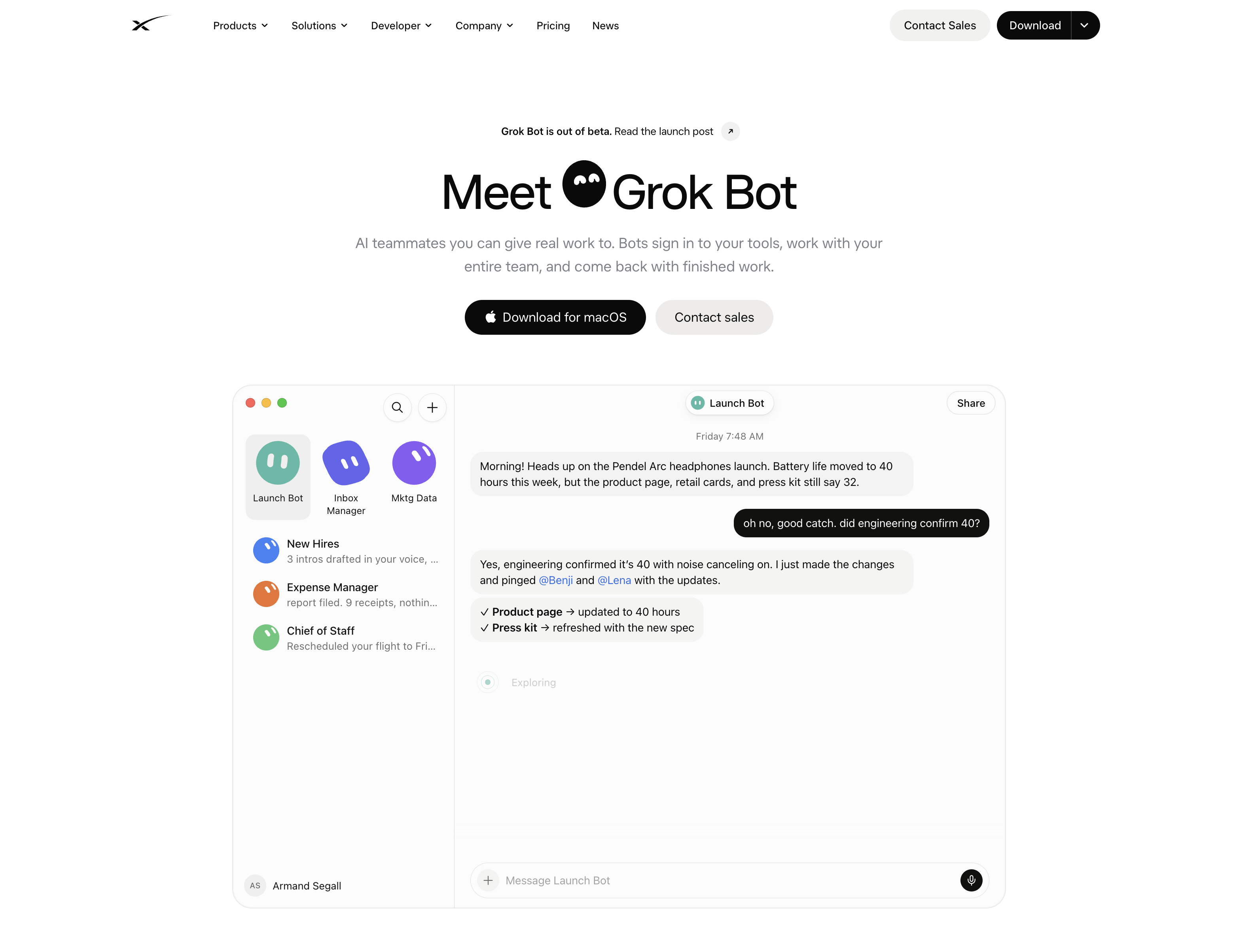
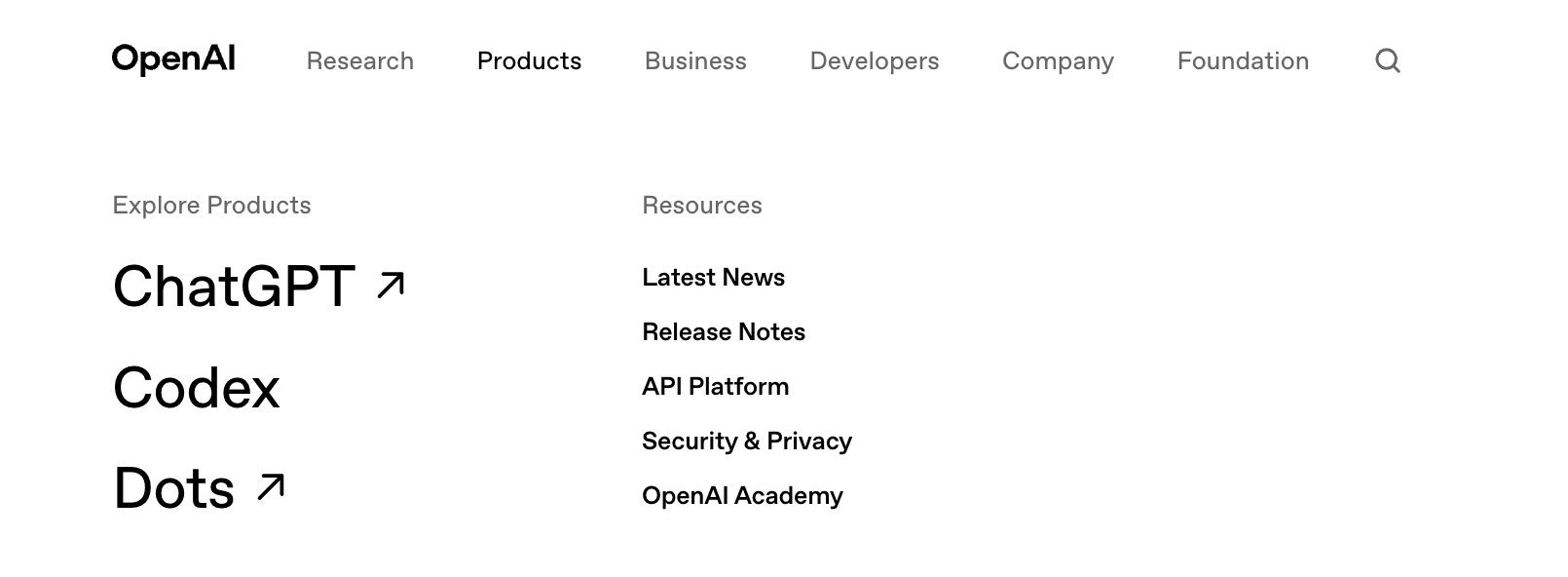
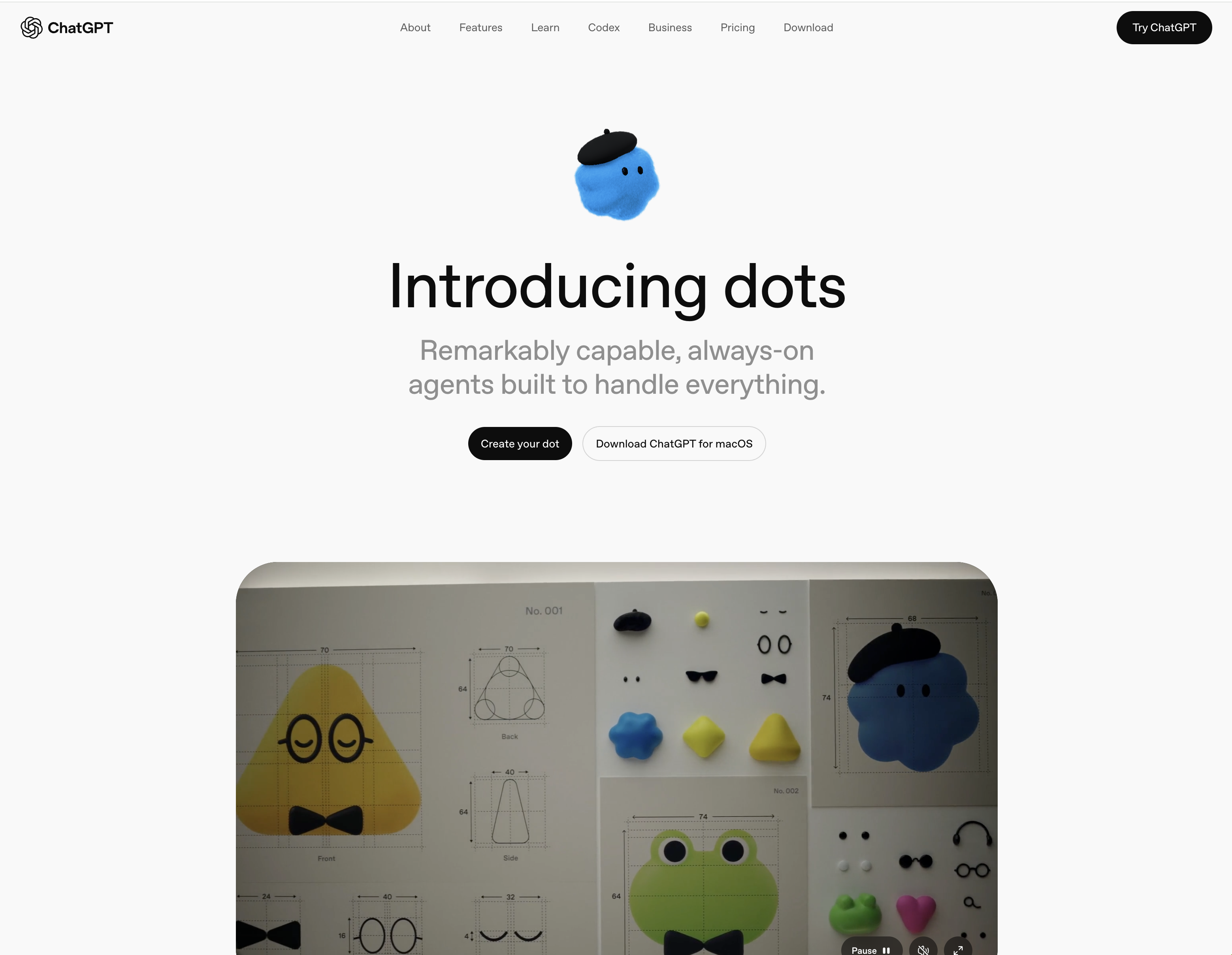
Each approach answers the same question differently: how visible should the AI be, and should it carry the parent's name or a personality of its own? We'll come back to this in a dedicated article on how brands give AI a face and a voice.
Which questions should you answer before choosing a model?
The right model comes from how your business sells, not from what looks good on a slide. A handful of questions settle most of it.
Take a group whose brief we studied recently. A software group of around 200 people, built over four decades, sells to completely different markets: industrial manufacturing on one side, healthcare on the other, quality management in between. For years, every sub-brand used the same identity as the parent. The result: consistent, but none of the sub-brands was recognizable on its own market, and a plant manager and a hospital pharmacist received exactly the same visual universe.
The group's own diagnosis was sharp: homogeneity had won over differentiation. Its goal was the opposite balance, with strong sub-brands that each speak their market's language and a visible family link to the parent.
These are the questions that got the project there, and the ones clients ask us most often:
- Do your brands share customers? If there is little cross-selling between business units, each brand has to win its market alone. If the same customer buys several products, a strong parent helps.
- What does the parent need to carry? Values, governance, financial solidity, an employer brand, an international footprint. The more it carries, the more visible it should stay.
- Is this a business unit or a brand? An internal organization chart is not a brand architecture. Not every unit deserves its own brand.
- Is this a product or a brand? Most products, ranges and modules are better served by a clear descriptive name under a sub-brand than by a logo of their own.
- How many levels do you really need? Two levels, a parent and a few sub-brands, cover most cases. A third level of "grandchild" brands usually adds confusion, not value.
- What happens with the next acquisition? The architecture has to tell you, in advance, where a new brand will land and how it will be attached.
- What about international entities? Local subsidiaries need naming rules too, or they will invent their own.
A useful exercise is to rule out the extremes first. In the case above, the group excluded both keeping one shared identity and creating brands with no visible link to the parent. That single decision narrowed the debate to the middle of the spectrum, where the real work starts.
What does the brand architecture process look like?
Strategy first, design second. The visual system only works if the architecture decisions are made, written down and shared before anyone opens a design file.
Here's how we run it at KLIMB, as part of the brand strategy phase of a rebrand:
- Audit the current portfolio. Map every brand, entity, product and logo in use today, on every key touchpoint. Most groups discover more brands than they thought they had.
- Interview inside and outside. Leadership, business unit heads and sales on one side; customers, partners and sometimes investors on the other. The goal is to learn which names customers actually remember and buy.
- Define the role of each level. What the parent carries, what each sub-brand carries, and what stays unbranded.
- Run an architecture workshop with leadership. We bring concrete options along the spectrum, each illustrated with real examples, and show what each one gives to the parent and to the sub-brands. The decision is made in the room, not by email.
- Set the attachment rules. How each sub-brand shows its link to the parent: an endorsement line, a shared colour, a common typeface, a signature on the website footer.
- Write the naming rules. For sub-brands, products, modules and international entities, including capitalization and when a product gets a name but no logo.
- Design the system. Only now does the visual identity work start: the parent logo, each sub-brand logo, and the shared and owned elements of each.
- Plan the rollout. Which websites, documents and channels change first, and how new brands will be integrated later.
One point deserves attention: who validates. Brand architecture touches how employees see their company. In one project, the client realized mid-process that staff had to be consulted before the leadership committee could sign off. That step is far easier to plan from day one than to add halfway.
How do you connect sub-brands to the parent visually?
Pick a few levers and use them consistently. Each one adds a bit of family resemblance; stack too many and the sub-brands lose their own voice.
- A mention in the footer or legal notice: signals "we belong to a group". Very light link.
- An endorsement line under the logo ("by", "from", "a ... company"): the parent vouches for the brand. Light to medium link.
- A shared colour across all brands: one family, recognizable at a glance. Medium link.
- A shared typeface or layout grid: coherence in documents and websites, without uniformity. Medium link.
- A common symbol or graphic element: a clear family signature. Strong link.
- The same logo construction: one company with several offers. Very strong link.
The combination matters more than any single lever. A group can keep a shared colour as the common thread, let each sub-brand build its own logo and imagery, and add a discreet endorsement on websites. Another can share typography and grid but give each brand its own palette. Both are coherent; they simply place the cursor differently.
Two practical rules help. First, decide the attachment mechanism without forcing the same logo construction on every brand: a sub-brand should be able to stand on a trade show booth without its parent. Second, test each option on real touchpoints, a homepage, a sales deck, a product screen, before choosing. A system that looks balanced on a brand board can feel very different on a website.
What are the most common brand architecture mistakes?
Most of them come from letting the organization chart, or history, design the architecture instead of customers.
- Turning every business unit into a brand. Internal structures change; brands should last longer than a reorganization.
- Giving every product a logo. Each new logo dilutes attention and multiplies the assets to maintain. A good product name often does more.
- Adding a third level. Grandchild brands under sub-brands confuse customers and teams alike.
- Choosing a model by taste. "I like how Salesforce does it" is not a reason. Your cross-selling, markets and growth plans are.
- Forgetting future acquisitions. Without a rule, every new company gets attached in its own way, and the architecture erodes within two years.
- Ignoring name confusion. If other companies share your parent's name, the new identity has to work harder to stand apart, especially in search and on social platforms.
- Leaving people out of the decision. Employees, local teams and subsidiaries live with the brands every day. An architecture they don't understand won't be applied.
Frequently asked questions
What's the difference between a branded house and a house of brands?
In a branded house, one master brand carries every product, like Google. In a house of brands, each brand stands on its own and the parent stays in the background, like Procter & Gamble.
What is an endorsed brand?
A brand with its own name and identity that shows its link to a parent through a mention or a signature, such as Instagram "from Meta" or Courtyard by Marriott.
Should the parent brand and sub-brands share the same logo style?
Not necessarily. Sharing a colour, a typeface or an endorsement line is often enough to show the family link while letting each sub-brand build its own personality.
When should a product get its own brand?
When it targets a distinct market, competes against specialized players, or may one day be sold separately. Otherwise, a descriptive name under an existing brand is usually stronger.
How long does a brand architecture project take?
The strategy part, from audit to validated architecture, typically takes a few weeks with a dedicated leadership workshop. The design and rollout that follow depend on the number of brands and touchpoints.
What should you do next?
List every brand, entity and product logo your group uses today, then ask one question for each: who buys it, and do they buy anything else from you? The answers will tell you where your parent brand should stand.
Then rule out the extremes you'd never accept, and bring the remaining options to your leadership team with real examples. The architecture decision will save you months of debate once the design work starts.
If you're preparing a multi-brand rebrand, KLIMB can help at every stage, from brand strategy and architecture workshops to visual identity and websites. Take a look at our work or tell us about your project.